Sendai — City of Gyutan
The largest city in Tohoku, Sendai is synonymous with one dish above all others: grilled beef tongue. Born from post-war ingenuity, gyutan has become one of Japan's most beloved regional specialties.
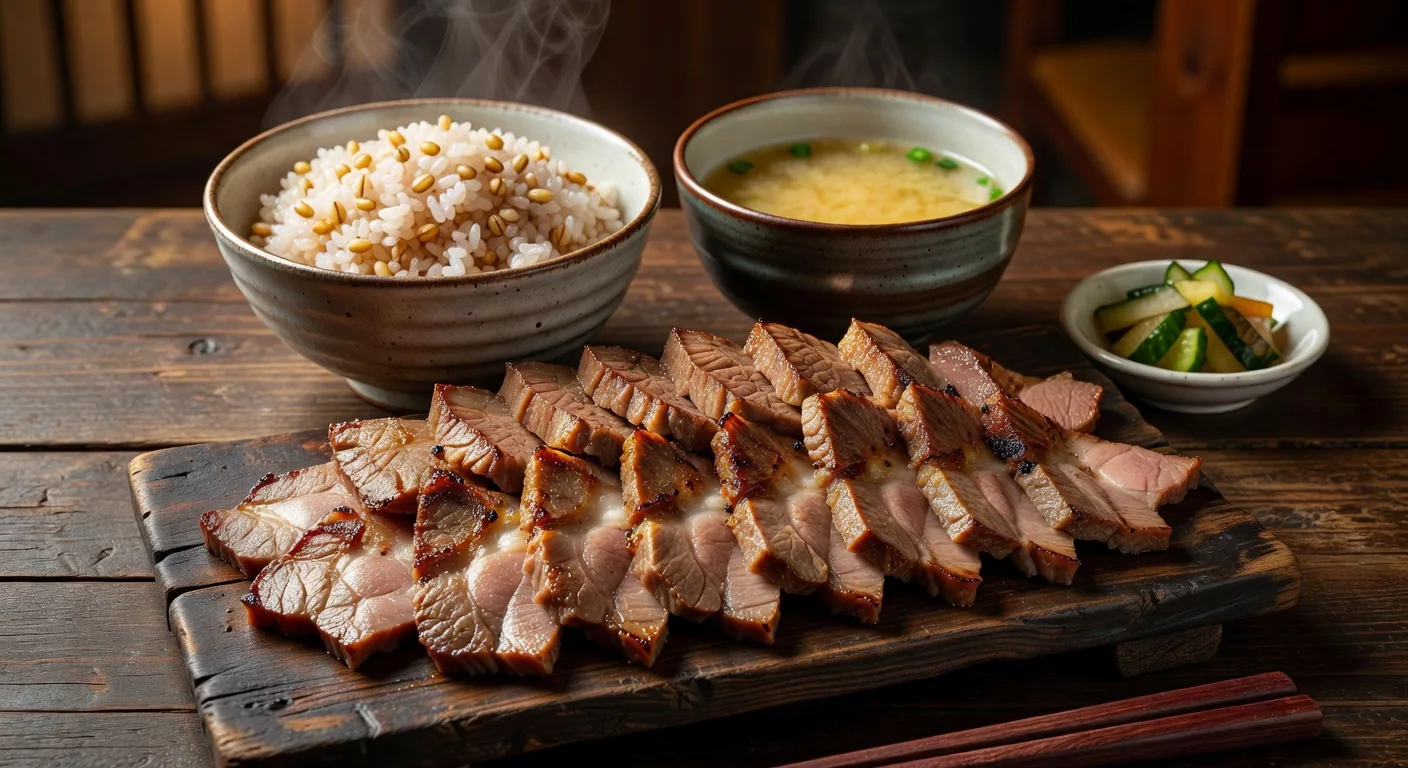
Gyutan — Sendai's Grilled Beef Tongue
In the years after World War II, Sendai chef Keishiro Sano was searching for ingredients to feed his customers in a time of shortage. American occupation forces had little use for beef tongue, so it was readily available. Sano began grilling the tongue over charcoal, seasoning it simply, and the dish was born.
Today, Sendai's gyutan is a refined dish served in specialist restaurants throughout the city. Thick slices of beef tongue — carefully aged, sliced against the grain, and seasoned with salt — are grilled over binchotan charcoal until smoky and tender, served alongside barley rice, oxtail soup, and pickled vegetables.
Akita — The Hearth Food of Tohoku
Akita Prefecture, facing the Sea of Japan in the far northwest of Tohoku, is known for some of Japan's most comforting cold-weather cuisine. The prefecture's long, snowy winters inspired ingenious dishes built around fermentation and the hearth.
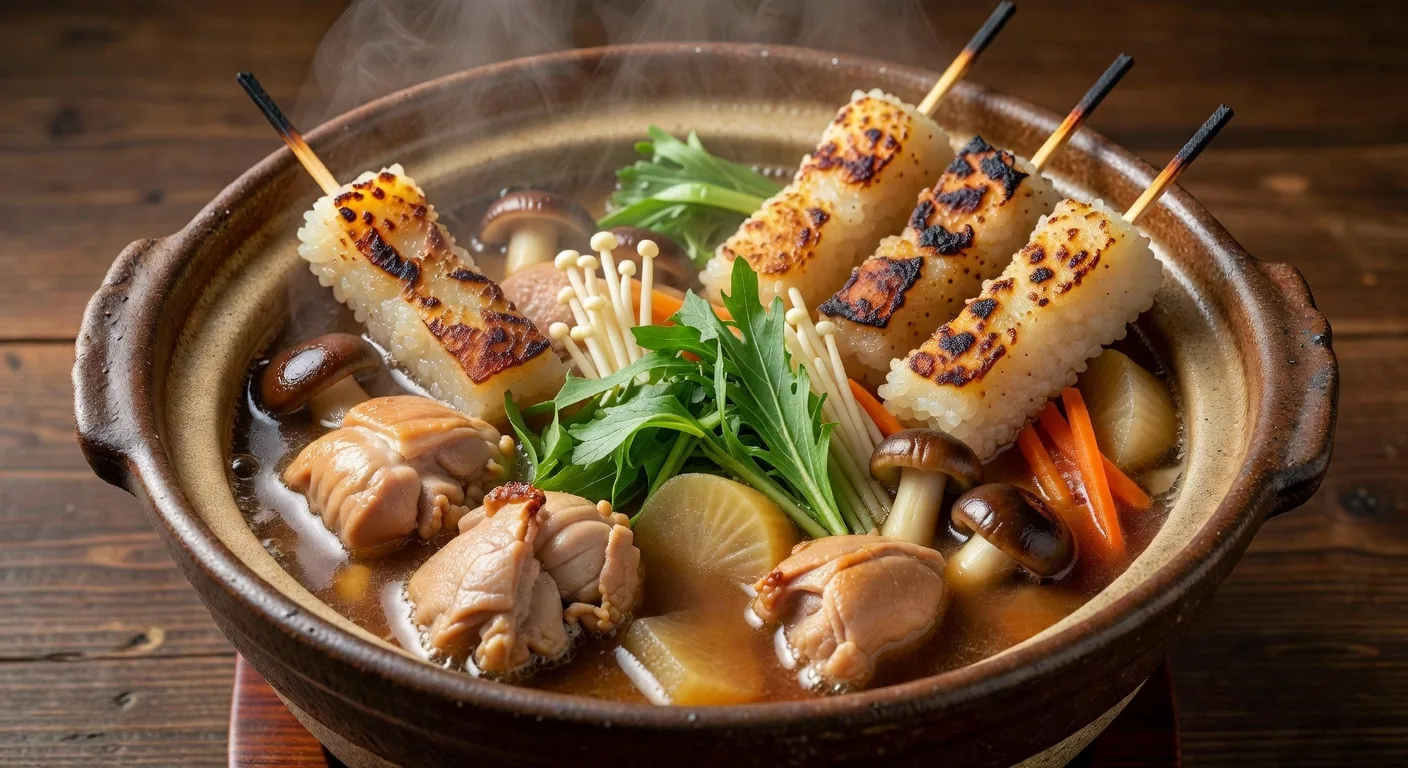
Kiritanpo Nabe
Kiritanpo are cylindrical logs of freshly pounded rice, skewered on cedar sticks and toasted over an open fire until fragrant and slightly charred. They are then removed from the skewer, cut into pieces, and simmered in a rich chicken hot pot broth (kiritanpo nabe) with burdock root, mitsuba, and Japanese leek.
The dish dates back to Akita's cedar-cutting workers, who needed portable, energy-rich food in the mountains. Today it is Akita's most celebrated dish — a must-eat during the autumn season when the new rice harvest is in.
Tokyo & Kanto — Edomae and the Modern Table
Tokyo — historically known as Edo — is home to one of the world's greatest food cultures. Its culinary identity was shaped by Edo-period merchants, fishermen, and the vibrant street food stalls that lined the canals.
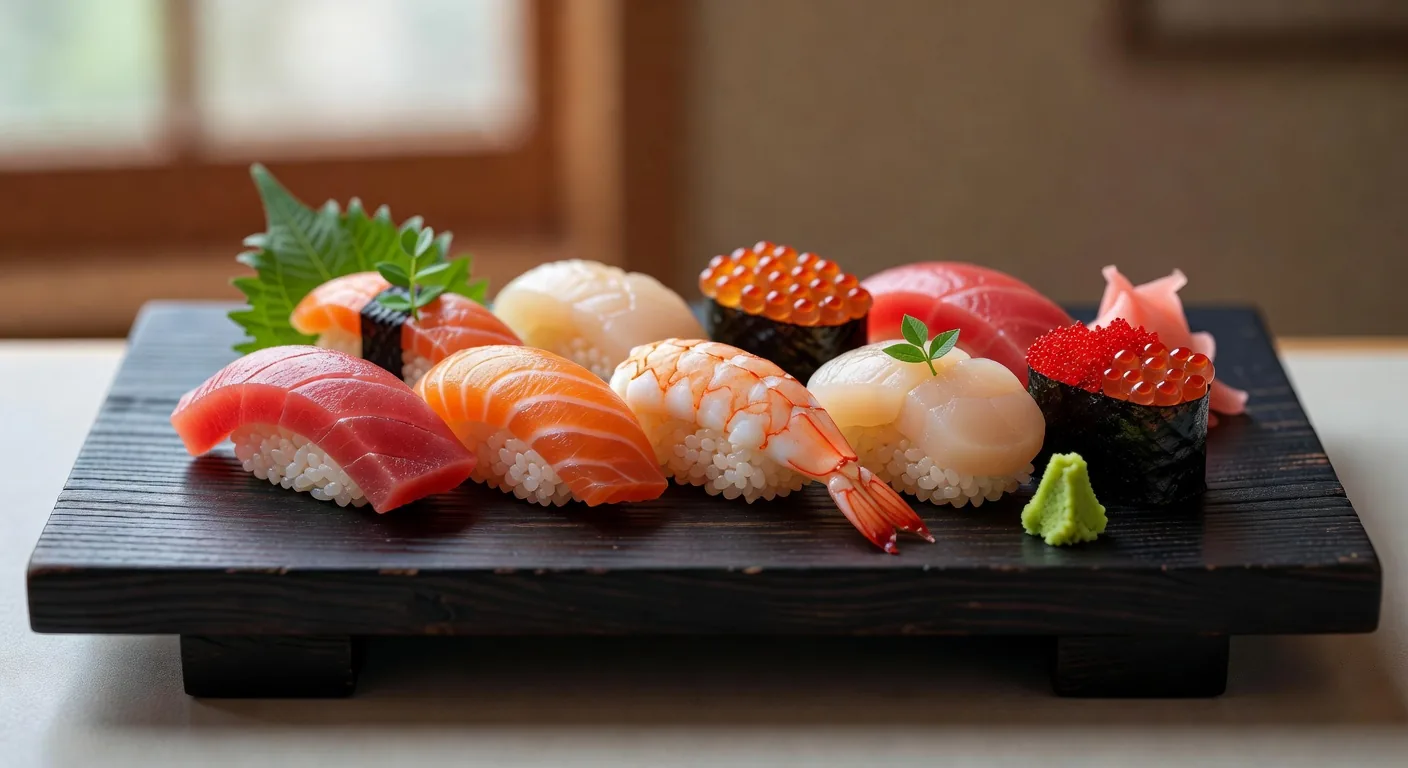
Edomae Sushi — The Original
Edomae sushi — literally "in front of Edo (Tokyo Bay)" — was born in 19th-century Tokyo as fast food for busy merchants and working people. Fish from Tokyo Bay were cured, marinated, or briefly aged to enhance their flavor and shelf life, then placed on small, hand-formed rice balls seasoned with red vinegar.
The finest Tokyo sushi restaurants today maintain this tradition of subtle preservation techniques — using different vinegars, briefly curing fish in kelp, or applying brief flashes of heat — to bring out the deepest possible flavor from each ingredient. Tokyo's proximity to Tsukiji and Toyosu markets gives its chefs access to the finest seafood in Japan.
Monja-yaki
Tokyo's answer to okonomiyaki — a loose, crispy-edged savory pancake unique to Tsukishima, historically a working-class neighborhood.
Edo-style Tempura
Light, airy, barely-there batter that shatters like glass. Tokyo's tempura tradition emphasizes contrast between the coating and the ingredient inside.
Shoyu Ramen
Tokyo's signature ramen — a clear, amber chicken-and-fish broth seasoned with soy sauce, served with wavy noodles and thin-sliced pork.
Wanko Soba
Iwate Prefecture's theatrical dining ritual — servers pour small bowls of soba in rapid succession as diners race to eat as many as possible.
Continue exploring Japan's regions: