Four Cities, Four Identities
The Cities of Kansai
Each city in Kansai carries a distinct food personality — shaped by its history, its people, and its relationship with the land and sea.
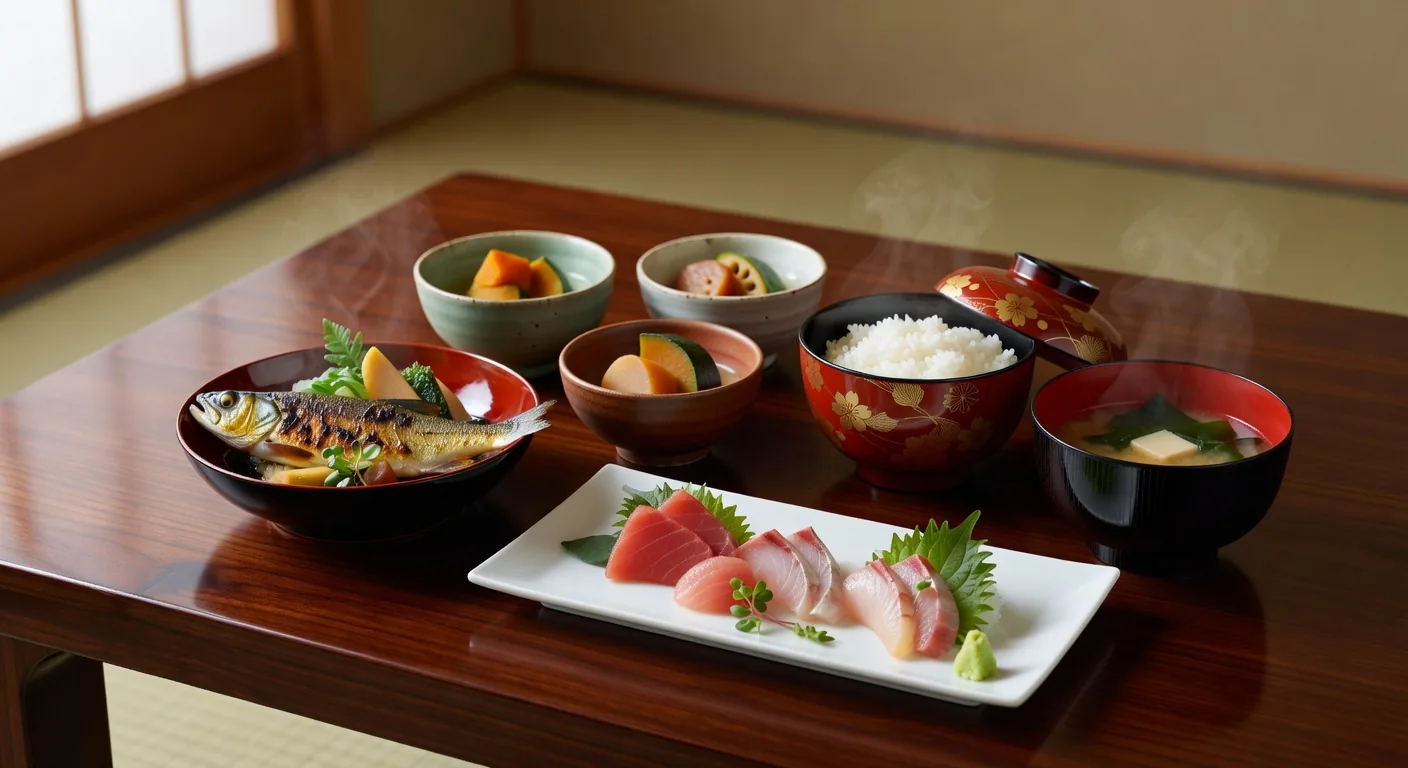
Kyoto · Ancient Capital
The Refined Table of the Imperial City
Kyoto was Japan's imperial capital for over a thousand years, and its food culture reflects centuries of refined imperial court cuisine. Kyoto-ryori — Kyoto cuisine — is characterized by extraordinary delicacy, seasonal precision, and a preference for vegetable and bean-based proteins over meat.
Kaiseki, Japan's formal multi-course dining tradition, evolved in Kyoto from the tea ceremony meal (kaiseki) and the formal banquet tradition (honzen ryori). Today it represents the highest expression of Japanese culinary art — a seasonal, artistic progression of dishes that must be experienced to be understood.
Kaiseki Ryori
Multi-course seasonal cuisine — the pinnacle of Japanese fine dining, born in Kyoto's tea ceremony tradition.
Kyo-yasai
Kyoto's heritage vegetables — Kamo eggplant, Kujo green onion, Shishigatani pumpkin — grown only in Kyoto.
Obanzai
Kyoto's everyday home cooking — small dishes of seasonal vegetables, tofu, and preserved foods.
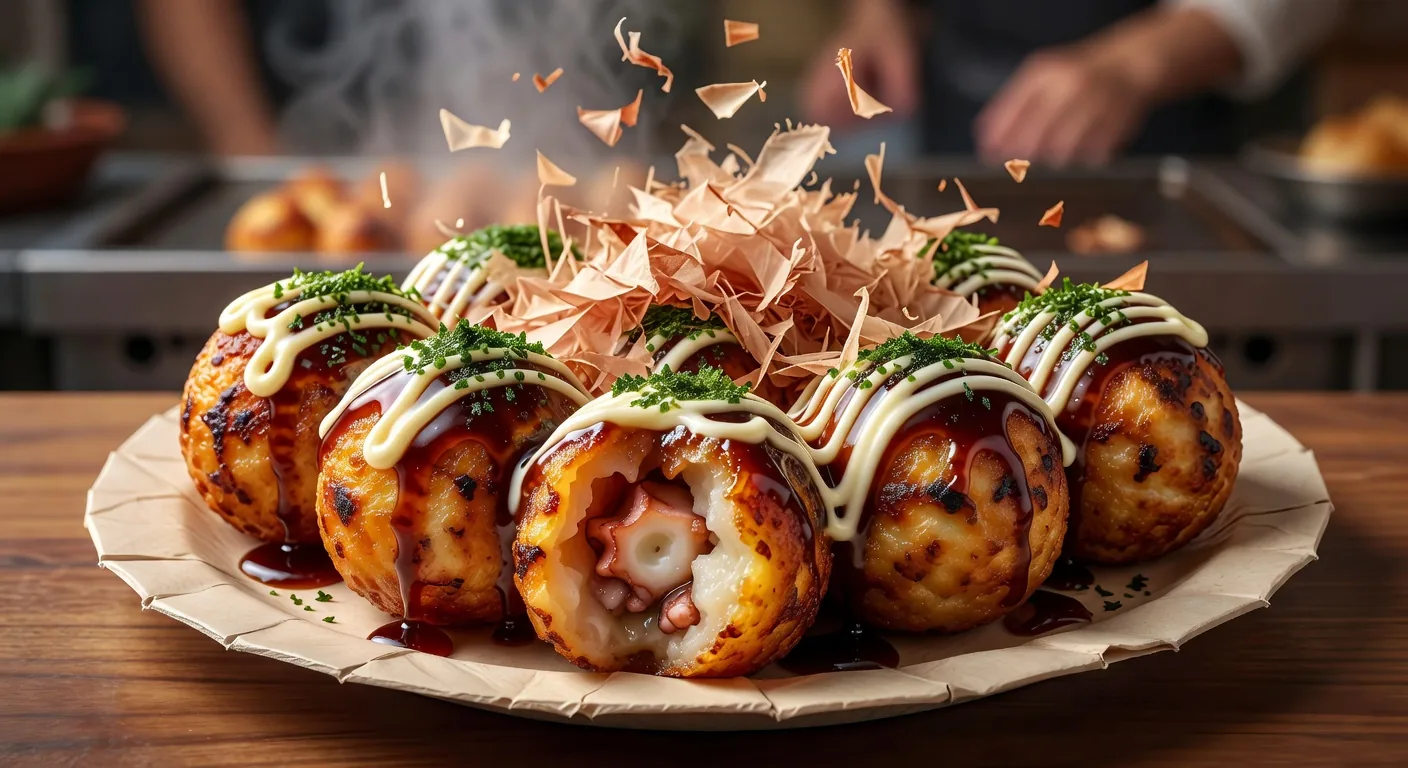
Osaka · Nation's Kitchen
Kuidaore — Eat Until You Drop
Osaka has a saying: "Kyoto people spend their money on clothes; Osaka people spend it on food." This reflects the city's profound, democratic relationship with eating. Osaka's food culture — kuidaore — is exuberant, communal, and proudly unpretentious.
Osaka was Japan's commercial capital for centuries, a merchant city where food was pleasure, not ceremony. The result is a city of extraordinary street food, standing noodle bars, and a restaurant culture built on generosity and flavor above all else. Dotonbori, Osaka's famous entertainment district, is one of the world's great food streets.
Takoyaki
Crispy octopus dumplings — Osaka's most famous invention, eaten everywhere from festivals to specialist shops.
Okonomiyaki
Osaka's savory pancake, loaded with cabbage, seafood or pork, and topped with mayo and tangy sauce.
Kushikatsu
Skewers of meat, vegetables, and seafood dipped in batter, deep-fried, and served with communal dipping sauce.
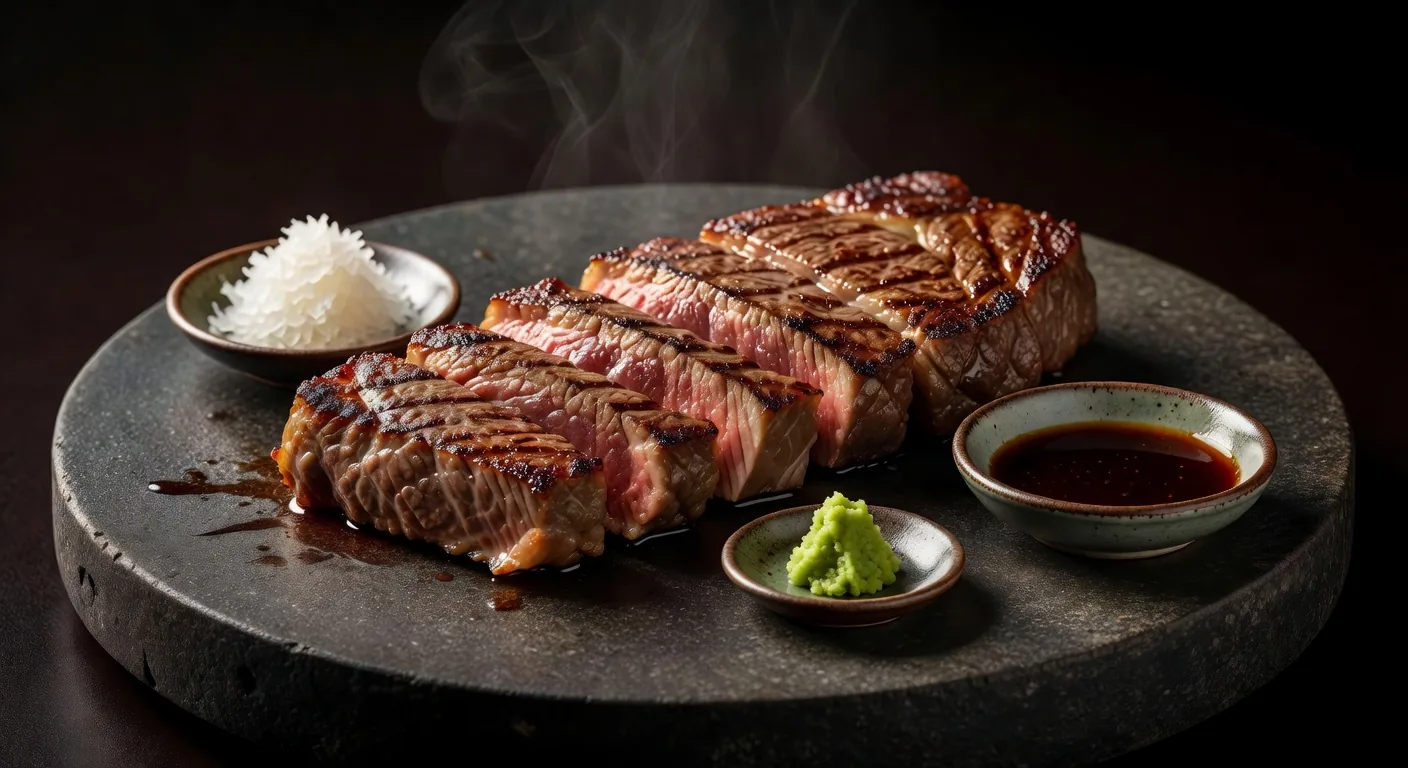
Kobe · International Port City
The World's Most Celebrated Beef
Kobe's status as Japan's preeminent international port — opened to foreign trade in 1868 — gave it a cosmopolitan food culture unlike anywhere else in Japan. Western cooking arrived early in Kobe, and the city became the birthplace of yoshoku (Western-style Japanese cooking) including beef steaks.
Kobe beef — from the Tajima-gyu cattle of nearby Hyogo Prefecture — is the world's most famous wagyu brand. To qualify as Kobe beef, the animal must be born, raised, and processed in Hyogo Prefecture, achieve the A4 or A5 quality grade, and meet strict marbling standards. The result is a texture and flavor unlike any other beef on earth.
Kobe Wagyu
The world benchmark for beef — extraordinary marbling creates a buttery, umami-rich flavor that dissolves on the palate.
Kobe Beef Teppanyaki
The theatrical iron griddle preparation — watching a master chef prepare Kobe wagyu on teppanyaki is itself a culinary performance.
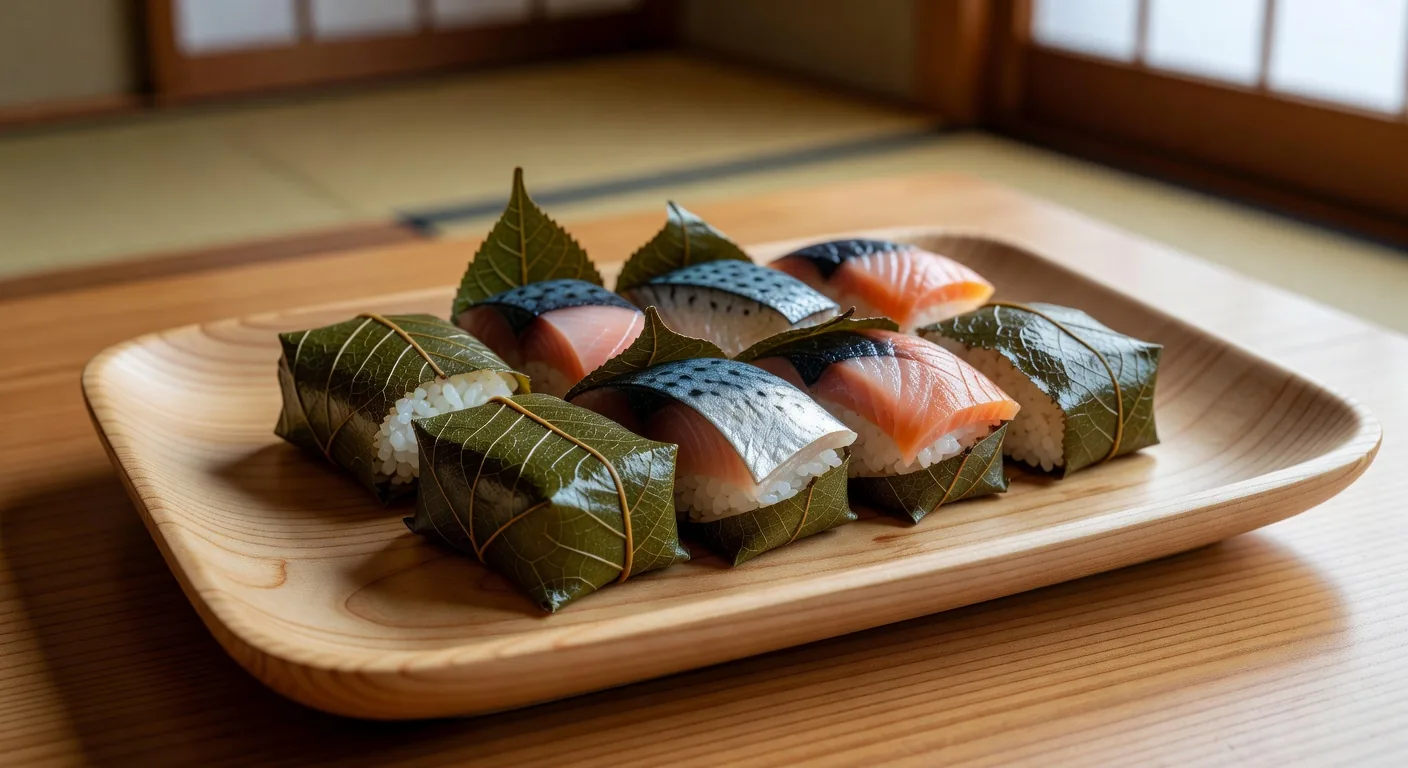
Nara · Ancient Buddhist Capital
Japan's Oldest Food Traditions
Nara was Japan's first permanent capital (710–794 CE), and the food traditions that developed here are among the nation's oldest. The city's Buddhist temples and aristocratic court demanded sophisticated cuisine that worked within strict dietary constraints.
Nara's most famous food creation is kakinoha-zushi — mackerel or salmon sushi wrapped in the distinctive leaf of the persimmon (kaki) tree. The aromatic, antibacterial properties of the leaf preserved the fish on mountain roads, while imparting a subtle, complex fragrance to the rice and fish. It remains a profound taste of ancient Japan.
Kakinoha-zushi
Pressed sushi wrapped in persimmon leaf — one of Japan's oldest preserved food traditions, with over 1,300 years of history.
Miwa Somen
Japan's oldest noodle — thin, delicate wheat noodles made in the Miwa area since the 7th century, eaten cold in summer.
"In Kyoto they say: 'The broth makes the dish.' In Osaka they say: 'The dish makes the mood.' In Kobe they say nothing — they just eat."— Kansai food philosophy
The World's Finest Beef
Understanding Kobe Wagyu
Kobe beef is not a brand — it is a precise certification system ensuring the world's most exceptional beef.
A5 Grade · Hyogo Prefecture
The Science of Extraordinary Marbling
Kobe beef's extraordinary quality comes from the Tajima-gyu cattle strain — a sub-breed of Japanese Black cattle raised only in Hyogo Prefecture. These cattle are raised for approximately 30 months (three times longer than conventional beef), fed on high-quality grain and hay, and kept in stress-free conditions in small groups.
The result is an intramuscular fat distribution — called sashi (marbling) — unlike any other breed. At body temperature, the fat begins to melt, coating the palate in a rich, umami-saturated lubricant that makes Kobe wagyu one of the world's most sought-after ingredients.
Only about 3,000 Kobe beef cattle are certified each year, making it one of Japan's most exclusive foods. Most is consumed domestically, with limited quantities exported.
Yield Grade (A)
The highest yield grade — meaning maximum usable meat from the carcass, indicating a large, well-formed animal.
Quality Grade (5)
The peak quality score — assessed on marbling, meat color, texture, and fat quality. Only A4 and A5 qualify as Kobe.
BMS Score 6+
The Beef Marbling Standard score — Kobe beef must score 6 or above on a scale of 1-12, with most premium cuts at 8-10.
Tajima-gyu
The specific cattle breed — born, raised, and processed entirely within Hyogo Prefecture. The bloodline is strictly controlled.
Continue exploring Japan's regions: