The Region
Three Distinct Culinary Worlds
Chubu's geography — Alps, Sea of Japan, Pacific Ocean, and fertile Nobi Plain — has shaped three very different food cultures within one region.
Nagoya-meshi
Japan's most bold and distinctive regional cuisine — built on hatcho miso, chicken wings, and grilled eel
Kaga Ryori
Refined kaiseki-style cuisine built on outstanding Hokuriku seafood and ancient Kaga Province traditions
Signature Dishes
Chubu's Most Celebrated Foods
From Nagoya's izakaya staples to Toyama's pristine seafood — the dishes that make Chubu unmissable.
Nagoya · Aichi Prefecture
Hitsumabushi — The Three-Way Eel
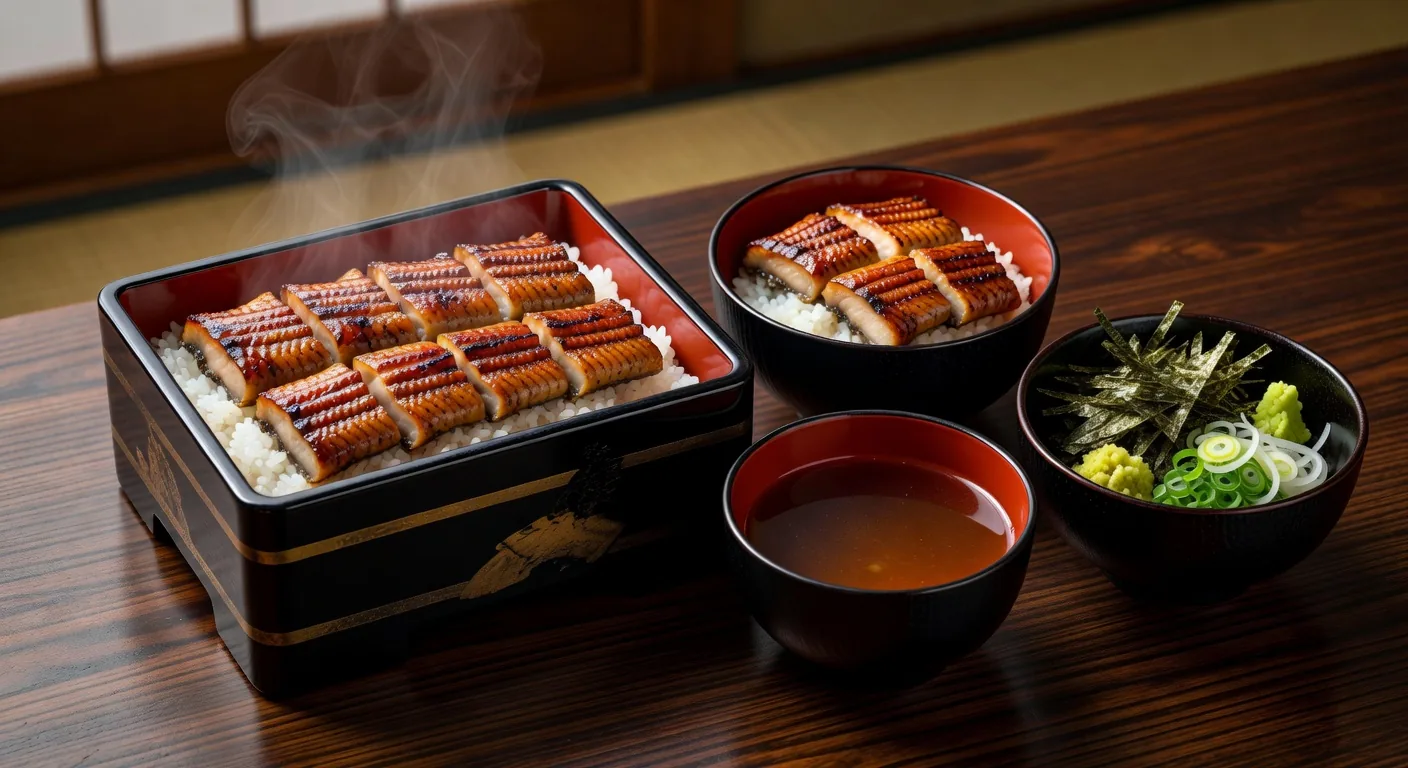
Hitsumabushi is one of Japan's most theatrical dining experiences. A lacquered box arrives filled with chopped grilled eel (unaju) over rice. Diners divide the portion into four, eating the first quarter plain, the second with condiments (wasabi, nori, green onion), the third poured with dashi broth as a tea-rice dish (ochazuke), and the fourth however they wish.
The eel is grilled in Nagoya's unique style — without steaming first, producing a crispier, more concentrated flavor than Tokyo-style unagi. The sauce is heavier and sweeter, made with Nagoya's hatcho miso.
Nagoya · Izakaya Culture
Tebasaki — Nagoya's Addictive Wings
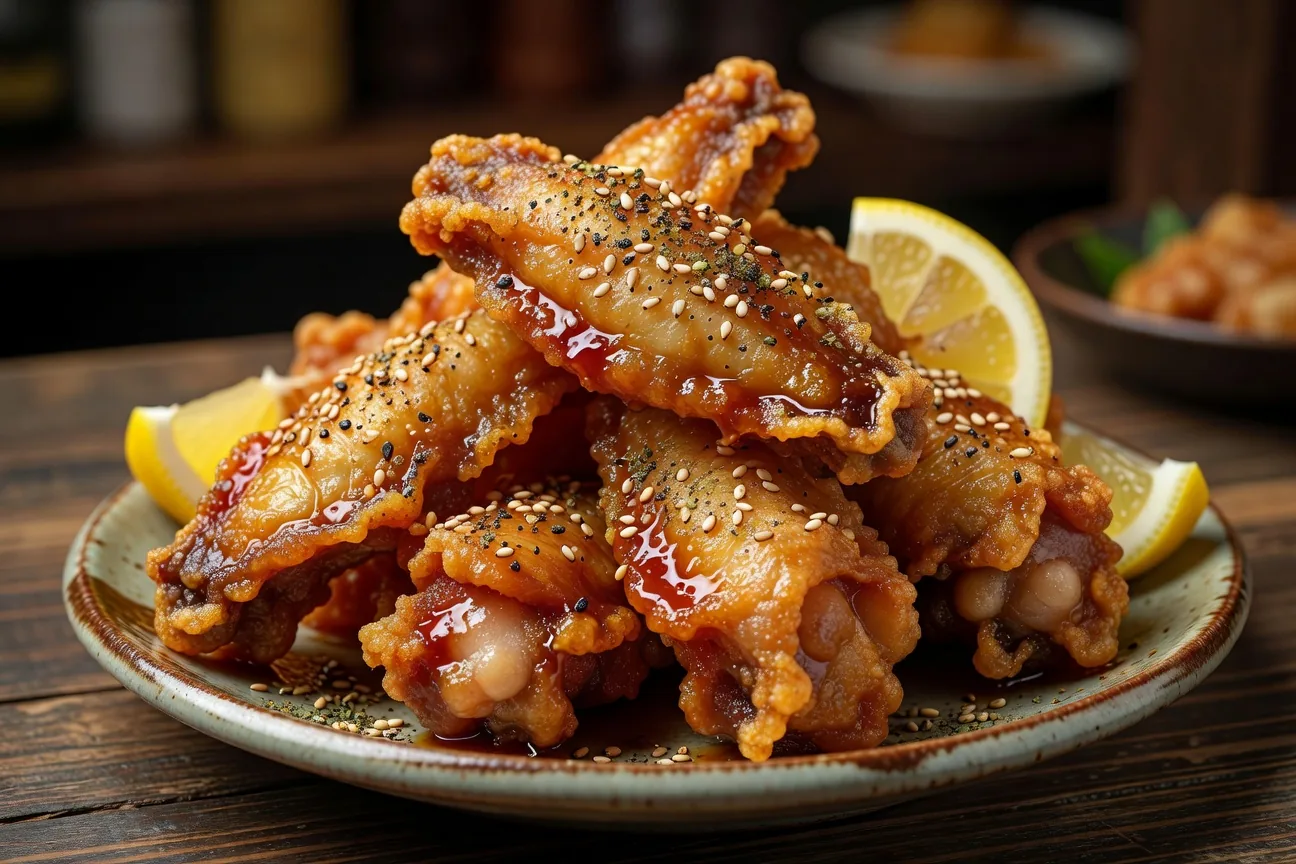
Nagoya's tebasaki are unlike chicken wings anywhere else in Japan. They are fried twice for maximum crispness, then glazed in a dark, sweet-savory sauce of soy, mirin, and sake, and finally dusted with white sesame seeds and black pepper. The result is intensely crispy, deeply flavored, and utterly addictive.
Tebasaki are the heart of Nagoya's izakaya culture — ordered by the tower at local beer halls, eaten standing at counter stalls, and debated endlessly in terms of which shop makes the best. They represent Nagoya's food philosophy: bold, unapologetic, and proudly different from the rest of Japan.
Kanazawa · Ishikawa Prefecture
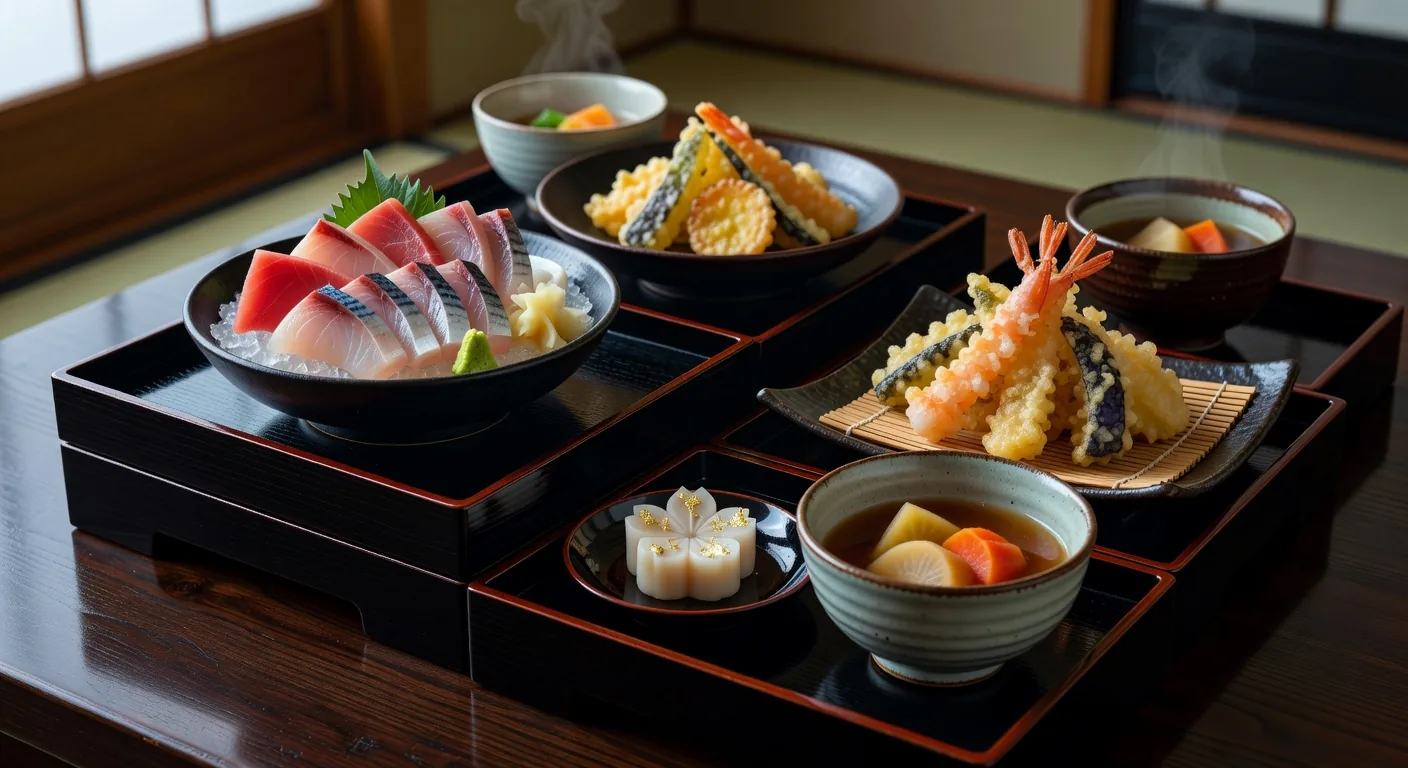
Kaga Ryori — The Other Kaiseki
Kanazawa's Kaga cuisine is often compared to Kyoto's kaiseki, but it has its own distinct character. The Kaga Domain was one of Japan's wealthiest feudal territories, and its aristocratic cuisine reflects centuries of refinement. Kaga ryori features dazzling Noto Peninsula seafood — including the celebrated Noto oysters, yellowtail (buri), and prized crab — alongside mountain vegetables and heritage Kaga vegetables grown exclusively in the region.
Kanazawa's proximity to the Sea of Japan gives its cuisine a richness and variety that Kyoto, being inland, cannot match. The city's historic Omicho fish market — called the "kitchen of Kanazawa" — is one of Japan's most remarkable food experiences.
Toyama Prefecture
Masu no Sushi — The Circular Masterpiece
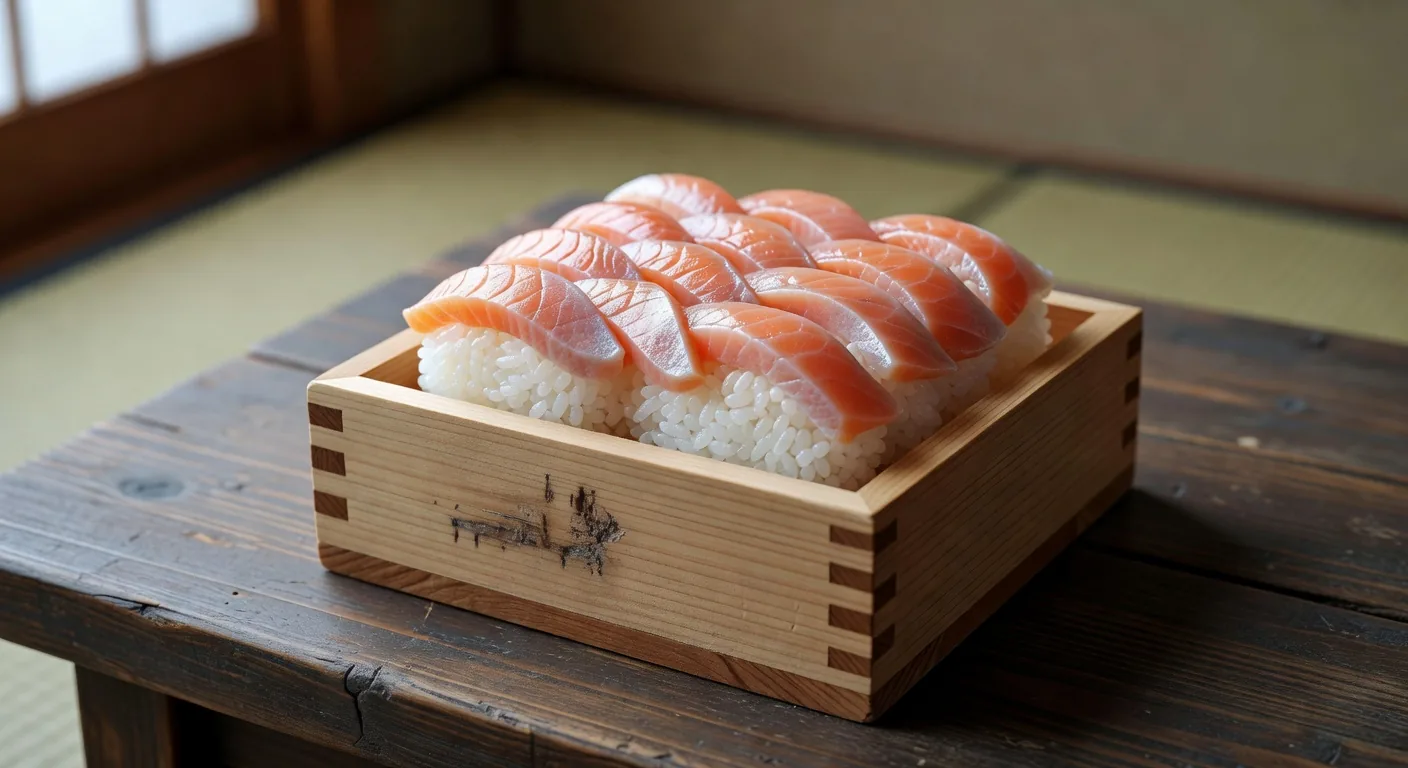
Toyama's masu no sushi is one of Japan's most beautiful pressed sushi creations. Saku cherry-salted trout (masu) is laid in a perfect circle over seasoned rice, wrapped in bamboo leaf, and pressed under weights in a circular cedar box. The result is a stunning geometric food object — sliced like a cake to reveal layers of pink trout over white rice.
Toyama Bay is one of Japan's deepest bays, creating a unique environment for exceptional seafood. The region is also famous for shiro ebi — tiny, translucent white shrimp found only here — and firefly squid (hotaru-ika), which bloom in miraculous bioluminescent displays in Toyama Bay each spring.
Also From Chubu
More Chubu Specialties
Miso Katsu
Tonkatsu (breaded pork cutlet) drenched in Nagoya's rich, dark hatcho miso sauce — one of Nagoya's most iconic comfort foods.
Kishimen
Nagoya's flat, wide udon noodles — broader and thinner than regular udon — served in a bonito-kelp broth. Eaten for over 400 years.
Shiro Ebi
Toyama's "white shrimp" — tiny, translucent shrimp found only in Toyama Bay, served as sashimi or in light kakiage tempura.
Hotaru Ika
Firefly squid from Toyama Bay — bioluminescent squid harvested at night from March to May, eaten boiled with miso dipping sauce.
Continue exploring Japan's regions: