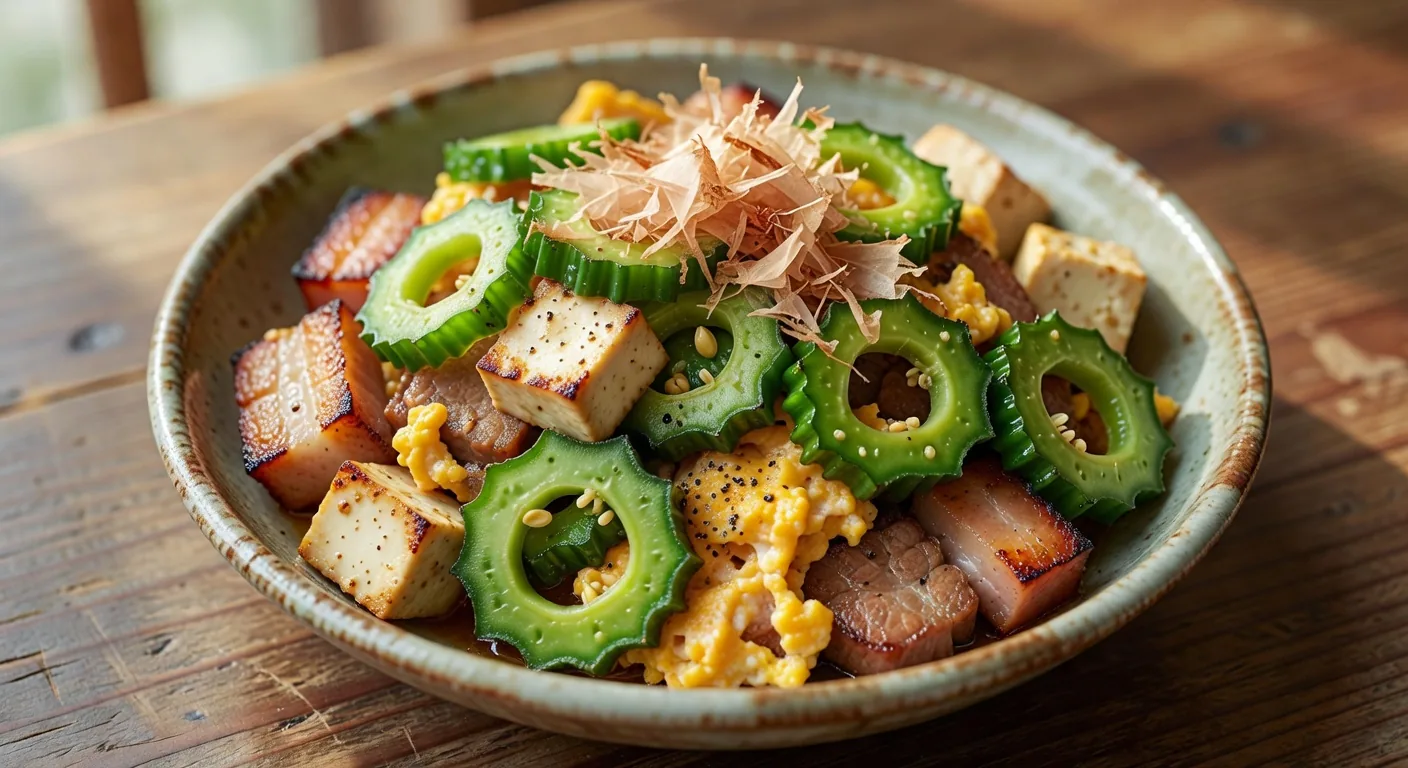
Goya Champuru
Bitter melon stir-fried with tofu, egg, and pork — Okinawa's most iconic dish. The bitter goya is believed to cleanse the body and aid digestion.
Southern Japan · 九州・沖縄
Japan's southernmost main island and its subtropical archipelago offer some of the nation's most distinctive flavors. From Fukuoka's world-famous tonkotsu ramen to Okinawa's centuries-old Ryukyuan cooking — this is food with unmistakable personality.
Kyushu
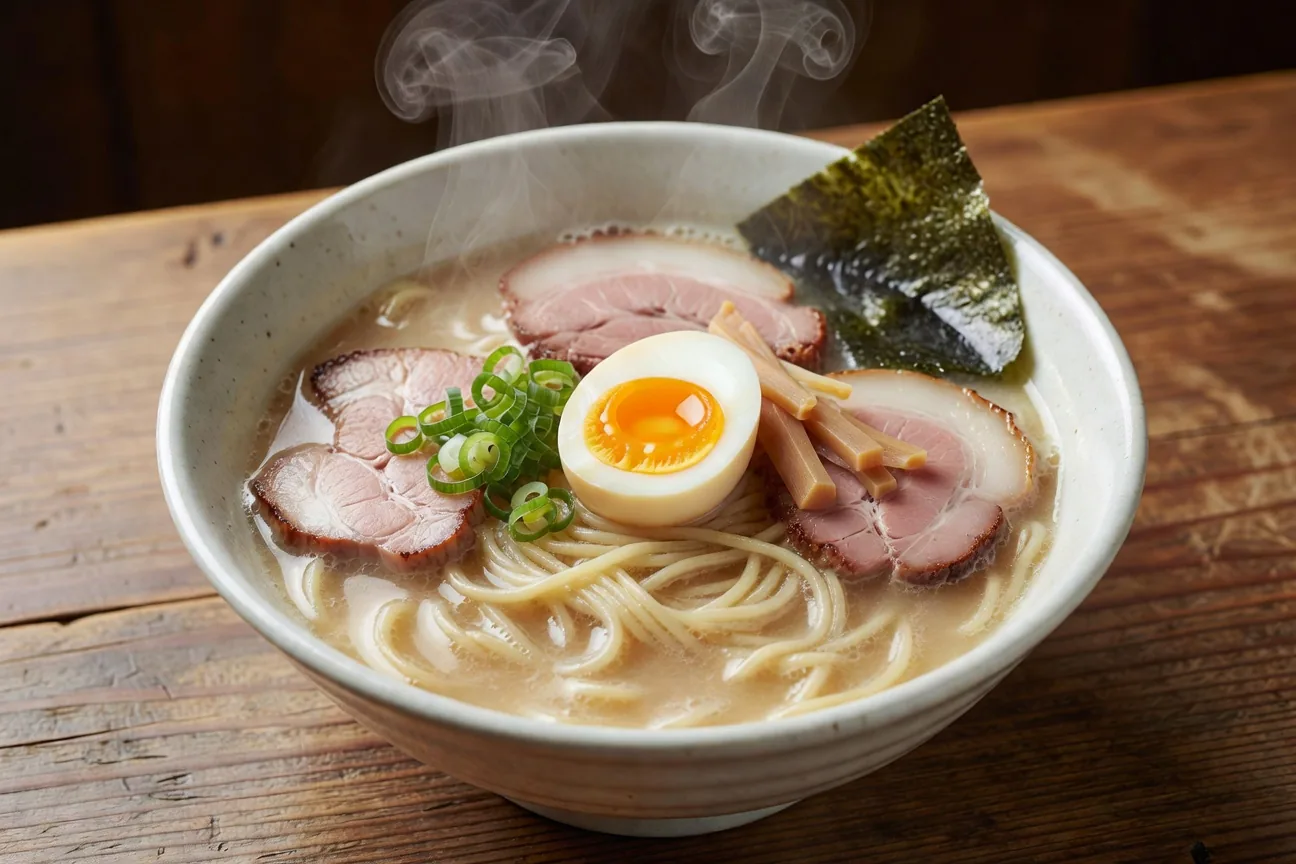
Fukuoka is the established ramen capital of Kyushu — and many argue, of Japan. Its tonkotsu ramen stands are a city institution, open around the clock.
Fukuoka · Hakata District
Hakata ramen is defined by its milky-white, intensely rich pork bone (tonkotsu) broth — a soup that requires hours of vigorous boiling to break down collagen and fat into its characteristic creamy, opaque emulsion. The noodles are unusually thin and firm (the hardness level is chosen by the diner), and the toppings minimal: sliced chashu pork, green onion, pickled ginger, and sometimes a nori sheet.
The ramen stalls that line Fukuoka's rivers and canal banks — the famous yatai (outdoor food stalls) — are among Japan's most atmospheric dining experiences. Open from dusk until the early hours, these small, curtained stalls serve Hakata ramen alongside beer and yakitori to locals and visitors alike, seated elbow-to-elbow on low stools.
The tradition of "kaedama" (noodle refills) is unique to Hakata — when you're almost finished, shout for additional noodles to be added to your remaining broth, customizing your bowl to your appetite.
Tonkotsu (pork bone) — boiled 15+ hours to a white, creamy emulsion
Very thin, straight, low-moisture — hardness ordered as kata/futsuu/yawa
Noodle refill system unique to Hakata — add noodles to your remaining broth
Open-air food stalls unique to Fukuoka — eat under the stars beside the river
Miyazaki Prefecture
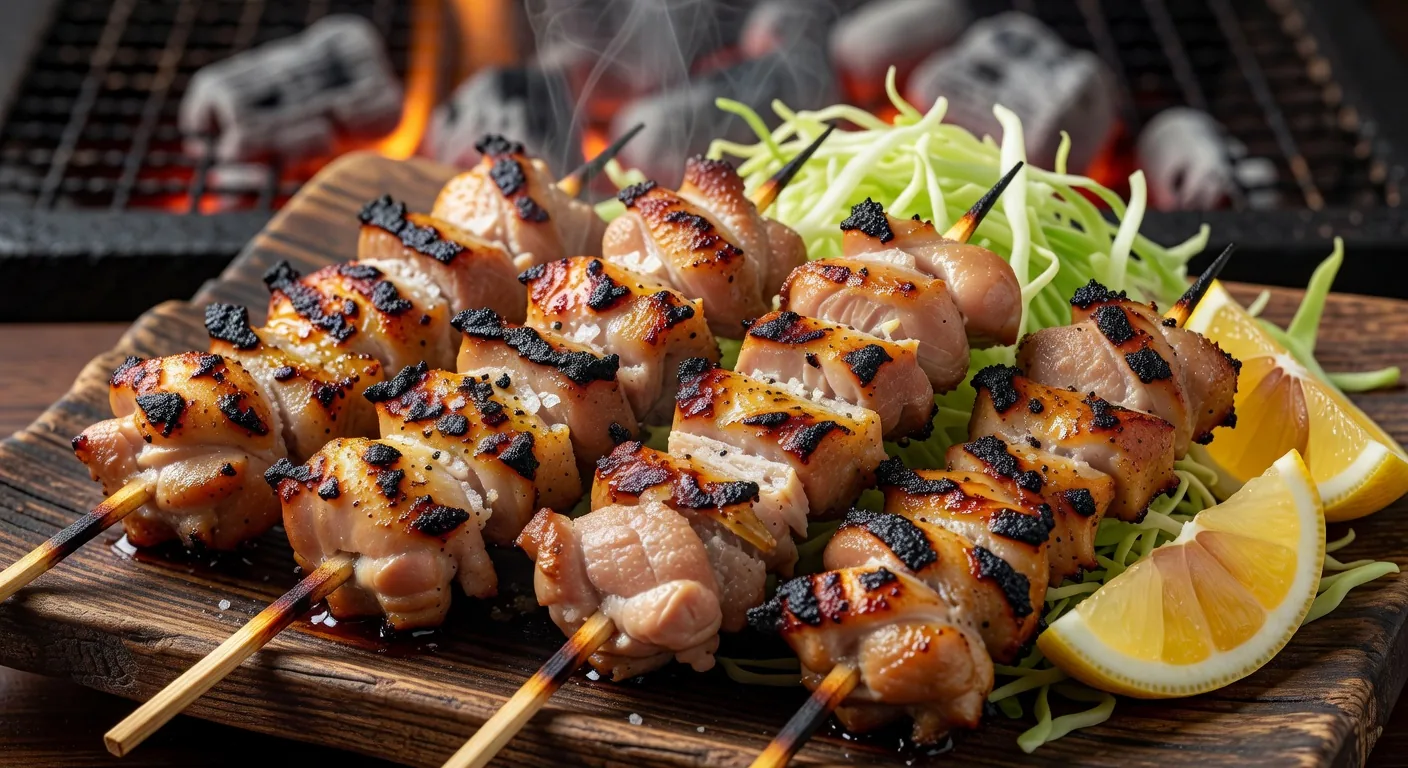
Miyazaki Prefecture, in the sunny southeast of Kyushu, is famous across Japan for the quality of its free-range chicken — jidori. The Miyazaki jidori chicken (specifically the "Hyuga Jidori" breed) is raised outdoors for at least 80 days, roughly twice as long as standard broiler chickens, with strictly controlled feed and space requirements.
The longer raising period produces meat with a completely different character from standard chicken: firmer, more flavorful, with a pronounced umami depth and a satisfying bite. Miyazaki jidori is most celebrated when simply charcoal-grilled (yakitori or tori no tataki — briefly seared chicken sashimi), which allows the quality of the meat itself to speak without interference.
Miyazaki's "chicken sashimi" (tori no tataki) is the most dramatic preparation — the chicken is briefly seared over flame, leaving the interior rare and silky, sliced paper-thin. Its safety depends entirely on the extraordinary quality and freshness of the jidori, and it is an experience unique to Kyushu.
Hyuga Jidori — free-range, raised 80+ days outdoors in Miyazaki
Firm, deeply flavored, pronounced umami — completely unlike standard chicken
Briefly seared chicken sashimi — unique to Kyushu, requires premium-grade bird
Charcoal yakitori or sashimi — simplicity reveals the exceptional quality
Okinawa's cuisine stands apart from all other Japanese food. For centuries an independent kingdom, the Ryukyu Islands developed a distinct culinary culture deeply influenced by China, Southeast Asia, and the sea. Okinawa's food — called Ryukyu Cuisine — is characterized by pork, bitter vegetables, fermented flavors, and a profound philosophy of food as medicine (nuchi gusui — food is medicine).
Okinawans were historically among the world's longest-lived people, and their diet — rich in pork collagen, purple sweet potato (beni-imo), bitter melon (goya), tofu, and kelp — has been studied extensively. The Okinawan approach to food is holistic, communal, and deeply tied to the concept of balance.
Bitter melon stir-fried with tofu, egg, and pork — Okinawa's most iconic dish. The bitter goya is believed to cleanse the body and aid digestion.
Slowly braised pork belly in soy sauce, awamori (Okinawan rice liquor), and mirin — rich, gelatinous, and deeply savory.
Thick wheat noodles in a clear pork-and-bonito broth, topped with braised pork and red ginger. Despite the name, it contains no buckwheat.
Vivid purple sweet potato unique to Okinawa — used in tarts, ice cream, and traditional sweets as one of the island's signature flavors.
More From Kyushu
Kyushu's seven prefectures each bring their own culinary contributions to Japan's food landscape.
Kumamoto
Lotus root stuffed with a paste of mustard and miso, battered and deep-fried — a visually striking Kumamoto specialty dating to the feudal era.
Kagoshima
Ground fish mixed with tofu, sesame, and vegetables, formed into patties and deep-fried. Kagoshima's essential snack, sweet and savory.
Nagasaki
Nagasaki's Chinese-influenced noodle dish — thick noodles in a rich milky pork-and-seafood broth loaded with vegetables. Born from Chinese trading influences.
Oita
Chicken tempura — chicken marinated in soy and ginger, coated in a light batter and fried. Oita's simple, satisfying regional specialty served with ponzu.
Continue exploring Japan's regions: